At Edify, we recognise that GCSE and iGCSE English outcomes are often determined by a student’s ability to decode “unspoken” examiner expectations. We offer specialist, autism-friendly tutoring for GCSE and iGCSE students, providing structured AuDHD academic support and explicit executive functioning tutoring. Our resources are intellectually serious, examiner-written, and designed to save students time while significantly raising the quality of their analytical output.
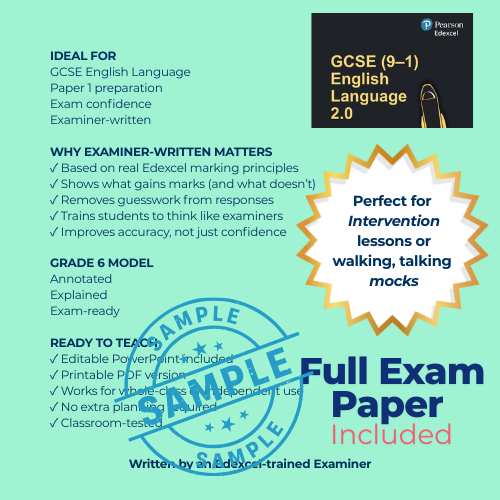
We navigate the transition from functional literacy to sophisticated exam performance with precision. Our bespoke tutoring ensures that students master the specific marking criteria demanded by AQA and Edexcel, bridging the gap between a candidate who “knows the text” and one who can master the exam.
In practical terms, this means:
Your child is not pressured to “mask” or rush through complex text analysis.
Lessons are structured, predictable, and follow the latest 2026 exam specifications.
We teach the system of exams explicitly so your child is not disadvantaged by hidden marking discriminators.
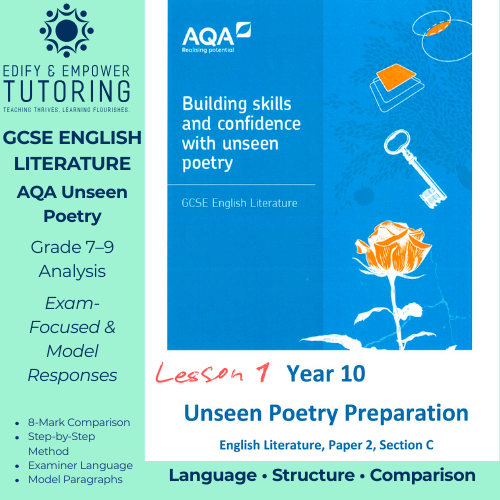
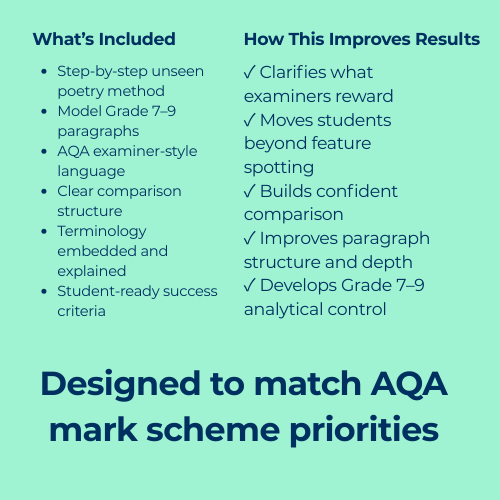
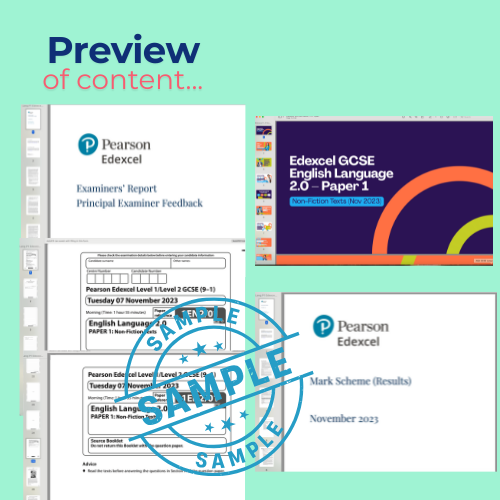
We support students by breaking high-stakes Paper 1 and Paper 2 questions into clear, manageable phases, with explicit entry points and “look inside” previews to reduce the friction of the blank page. This structured approach enables students to move beyond feature-spotting and develop confident, controlled analysis at Grade 7–9 level.
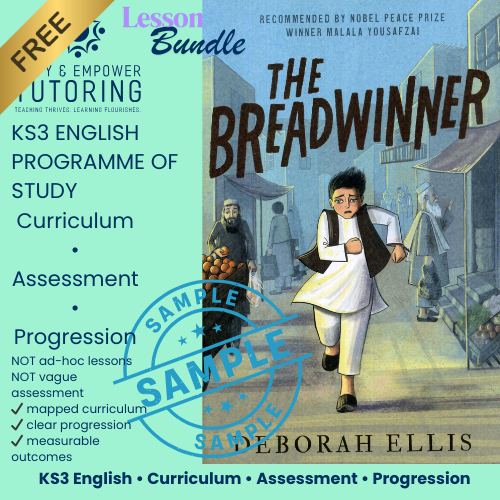
We make exam expectations explicit by clearly explaining what examiners reward and how marks are awarded. Analytical habits and historical understanding are developed through curriculum-coherent study of modern and classic novels, supported by examiner-written guides that model how high-level responses are constructed and judged.
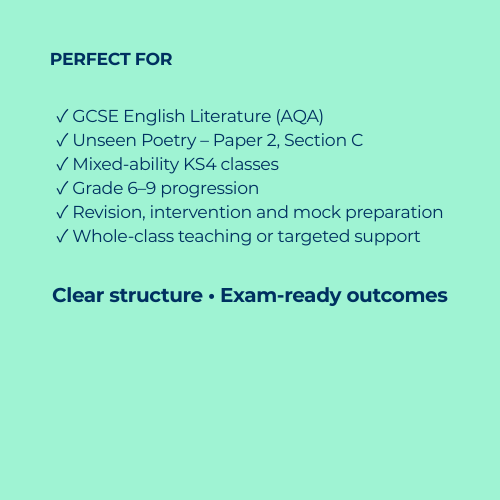
Each session follows a shared lesson agenda tailored to the relevant exam board, with clear written notes and question-by-question breakdowns provided afterwards. Different processing speeds are fully respected when tackling unseen poetry or non-fiction, and high-level responses are explicitly modelled so students understand not just the grade, but the reasoning behind it.
Each session follows a shared lesson agenda tailored to the relevant exam board, with clear written notes and question-by-question breakdowns provided afterwards. Different processing speeds are fully respected when analysing unseen poetry or non-fiction, and high-level responses are explicitly modelled so students understand the reasoning behind the grade.
Mastery of Comparison: Move students from uncertainty to confident comparison using examiner-aligned pathways.
Sequenced Instruction: A curriculum-coherent approach designed to secure higher-level marks through purpose and voice analysis.
Measurable Improvement: Includes analytical writing frameworks and feedback targets to secure exam progress.
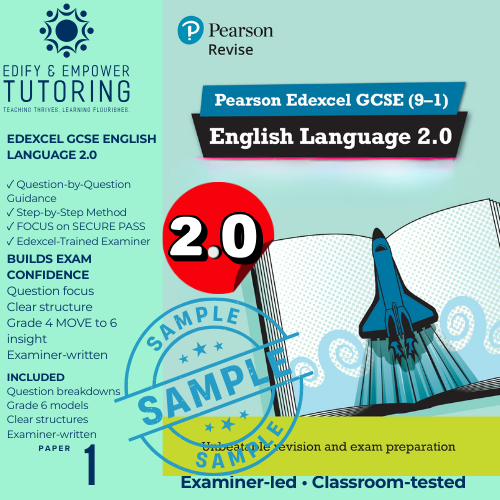
Question-by-Question Guidance: Step-by-step preparation for both Paper 1 and Paper 2, written by trained examiners.
Grade 6+ Models: Explicit focus on moving responses into the top mark brackets through precise, mark-aware structures.
Technical Mastery: Focuses on reading strategies, vocabulary precision, and structural accuracy.
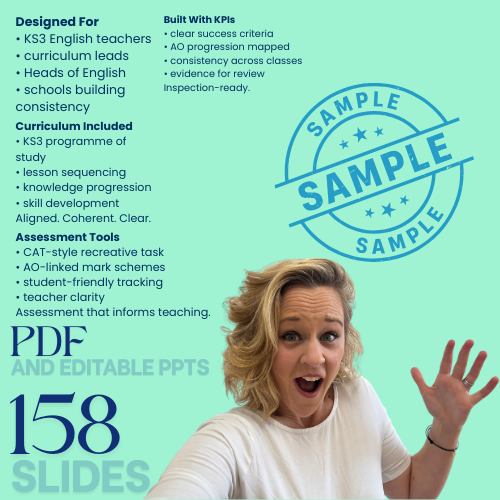
Curriculum Coherence: Replaces ad-hoc lessons with a sequenced, inspection-ready programme for diverse and international cohorts.
Intellectual Foundations: Builds the historical understanding and conceptual confidence needed to engage with complex themes.
Synthesis of Skills: Connects character, context, and theme into structured, purgeful assessments.
No pressure to “mask.”
Lessons are predictable.
We teach the “hidden rules” of exams.
45% Increase in Academic Confidence: Students show a 45% increase in confidence when tackling “unseen” exam materials independently.
90% Assessment Completion Success: A 90% success rate in meeting all internal and external deadlines for GCSE and A Level coursework.
Accelerated Subject Mastery: Students master complex subject material an average of five months faster than in a traditional classroom setting.
During this call, we will:
Listen to your child’s current experience of school or exams.
Explain the specific practical adjustments we can make to our tutoring.
Be honest if our approach is a good match or if another pathway would serve them better.
There is no obligation and no pressure to commit.